Inspection Systems
Can Laser Code Inspection System
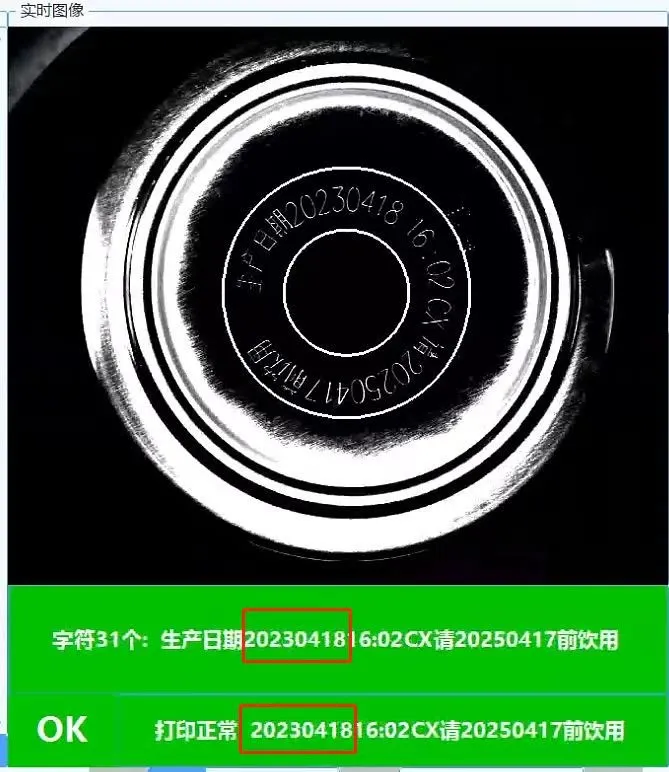
On beverage lines, it runs OCR vision inspection on every can after laser marking, checks that production date, batch and best-before codes are present and correct, and rejects failed cans inline.
Highlights
- Laser marking + vision inspection + inline rejection, integrated into the existing conveyor
- Every can is imaged, read and judged, replacing manual sampling with full inline inspection
- Lighting and algorithms optimized for reflective aluminum can bottoms and circular text
- Mixed Chinese characters, digits, letters and symbols; fixed text and variable dates checked together
- 4.9 ms algorithm time per image (on-site software statistics)
- NG images saved automatically and traceable by time period and batch
Overview
Production and best-before dates are mandatory markings on food and beverage packaging. Can lines run fast and the codes are engraved on a reflective metal bottom, so manual inspection can neither see every can nor read them reliably:
- Missing or wrong codes are hard to catch: marker dropouts, wrong date settings and broken characters slip through, because manual sampling covers only a tiny share of output.
- Metal can bottoms are hard to read: reflections, concentric ridges and circular text layout make fine laser-engraved characters difficult for ordinary code readers.
- High recall and compliance cost: mislabeled products that leave the plant can lead to batch recalls, regulatory penalties and brand damage.
The system is integrated into the existing conveyor. Cans pass the laser marking, vision inspection and rejection stations in sequence, without changing the line’s takt time. It is running on a beverage production line.
System
| Component | Description |
|---|---|
| Laser marker | Engraves production date, time, batch code and best-before date; no consumables, hard to erase |
| OCR vision unit | Industrial camera with dedicated lighting images the code area; algorithms locate, read and compare characters |
| Rejector | Removes unreadable or incorrect cans inline; good cans continue downstream |
| Control and display terminal | Shows live images and results, records data for traceability and defect statistics |
How it works
- Infeed: cans enter the marking station on the conveyor
- Laser marking: characters are engraved per the current date and batch rules
- Image capture: a can in position triggers the camera
- OCR judgment: the character ring is located, then each character is read and compared with the expected content
- Reject / pass: failed cans are rejected, good cans continue
Checks
- Presence: detects missing marks, dropouts and missing characters; blank cans are rejected.
- Content: compares against the configured date and batch rules to catch wrong dates and codes.
- Logic: checks that production date and best-before date match, avoiding parameter errors.
- Quality: detects blurred, broken or offset characters.
Defects detected on site
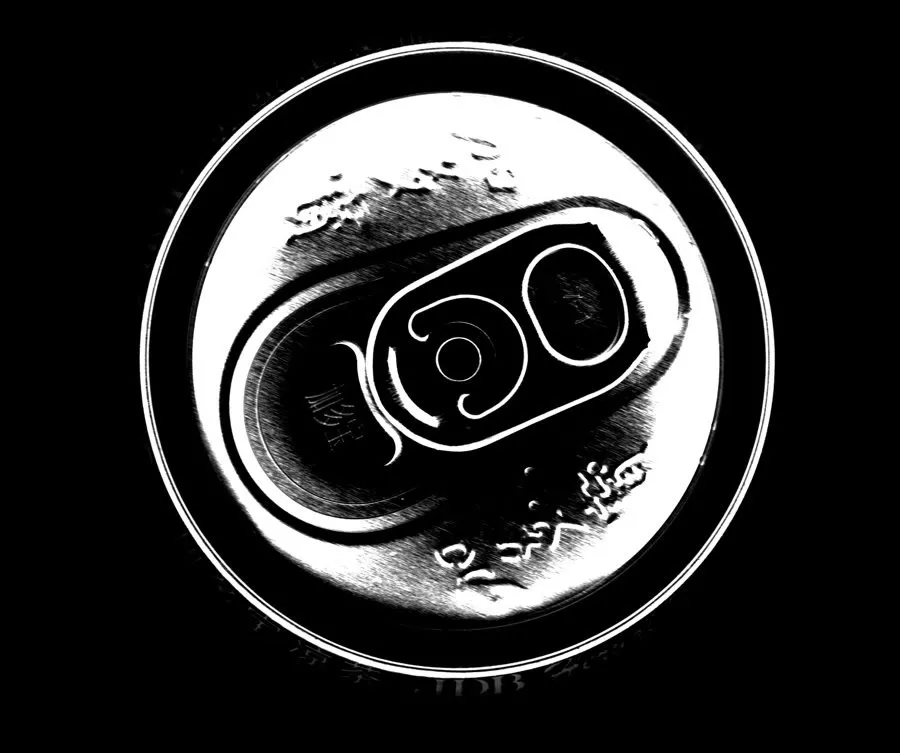
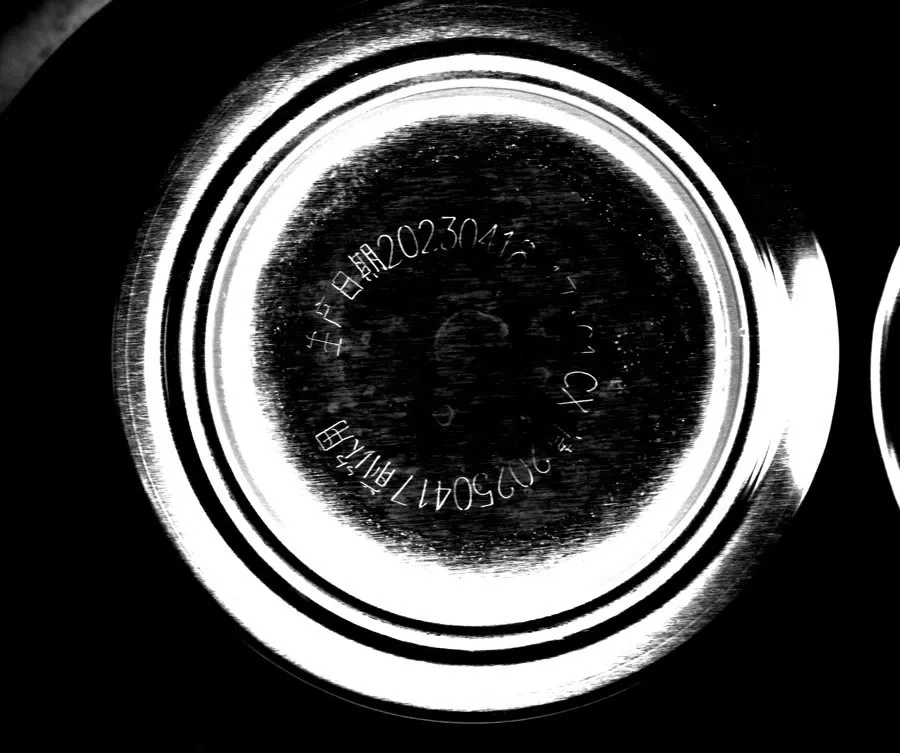
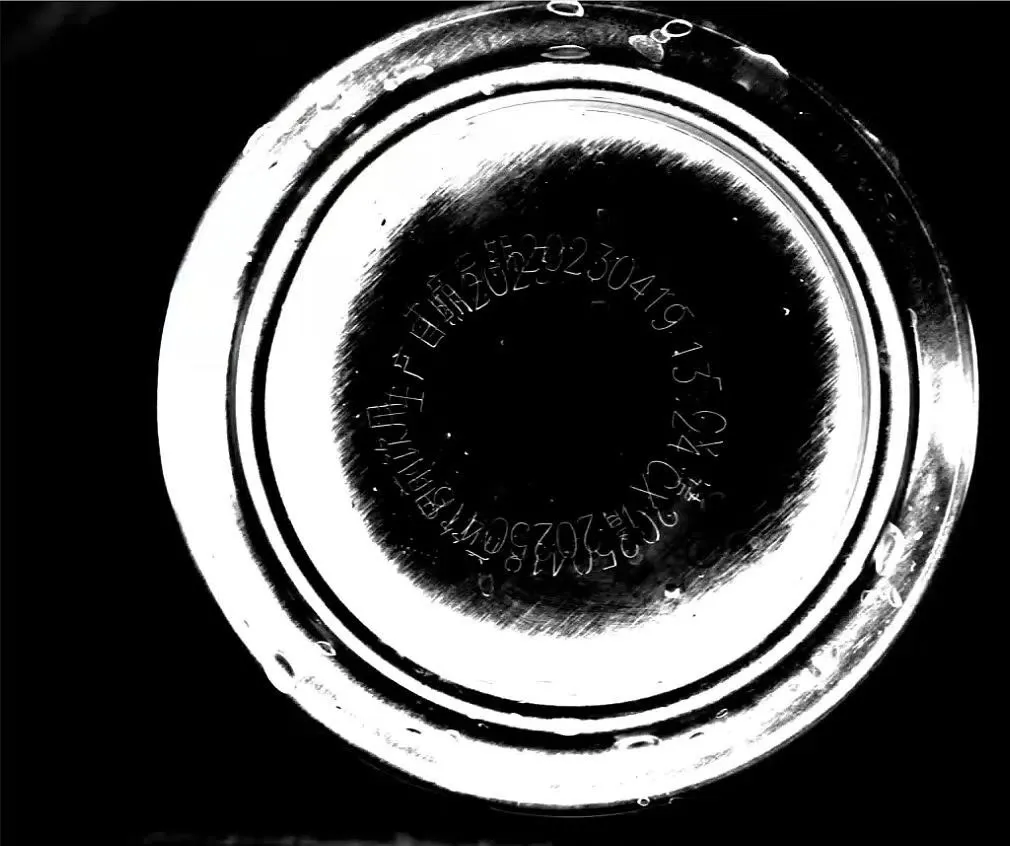
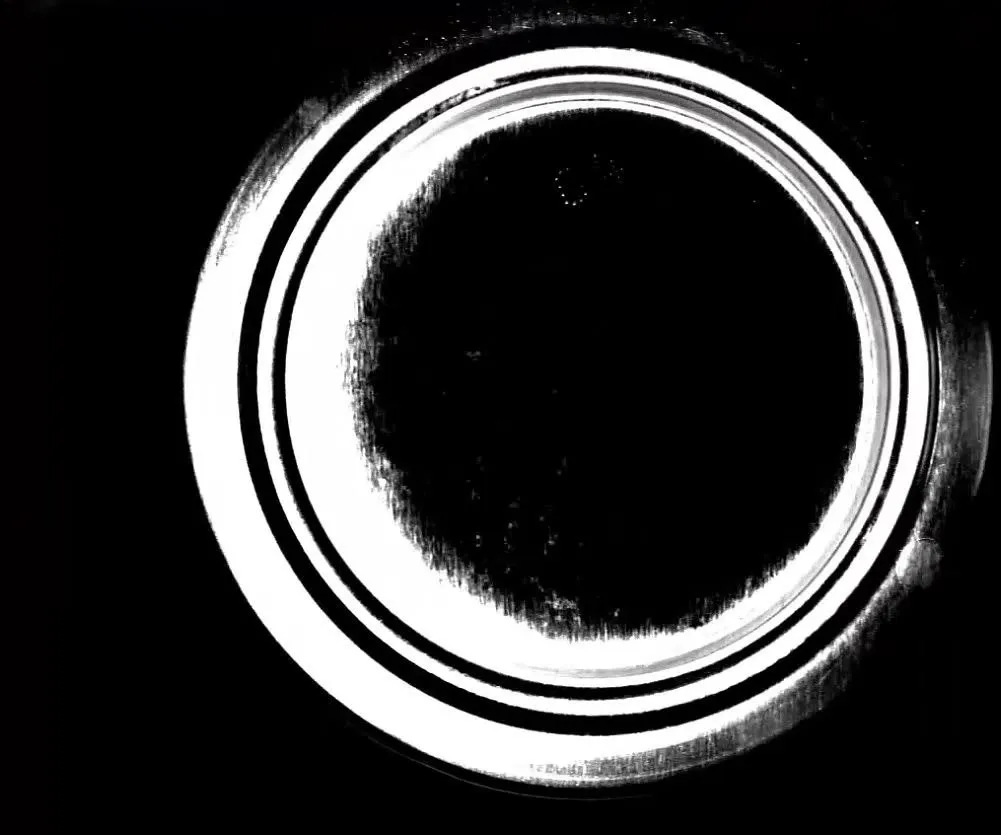
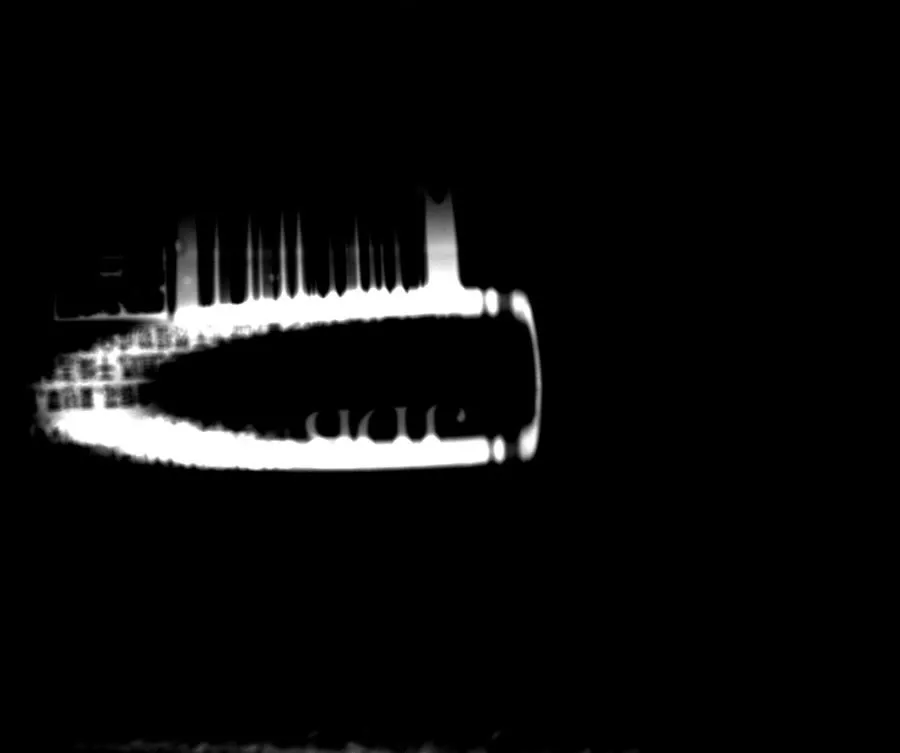
The defect images in the gallery were all captured on the production line and judged NG by the system, then removed by the rejector.
| Defect | Description |
|---|---|
| Upside-down | The can enters inverted, so the camera sees the lid with the tab. The system recognizes orientation and rejects it |
| Missing characters | Only part of the code is printed. The character count is compared with the set value, so even one missing character is caught |
| Double printing | The can is marked twice; overlapping characters are detected as extras |
| No printing | No characters on the bottom, usually caused by a marker that did not fire; character count is 0 |
| Fallen can | The can has fallen over and no normal bottom image is captured; it is rejected |
Software
The software shows the current image, character count and result (OK / NG with defect name) in real time. NG images are saved by time and can be reviewed under defect browsing. Good and NG counts are summarized by shift and batch, and parameters such as expected character count can be changed directly on screen.
The same vision architecture can be adapted with different cameras, lighting and rules for bottled drinks, canned food, personal care and pharmaceutical packaging, and carton codes.
Gallery
Related products
 Product video1:34
Inspection Systems
Yarn Break Inspection System for Laminating Machines
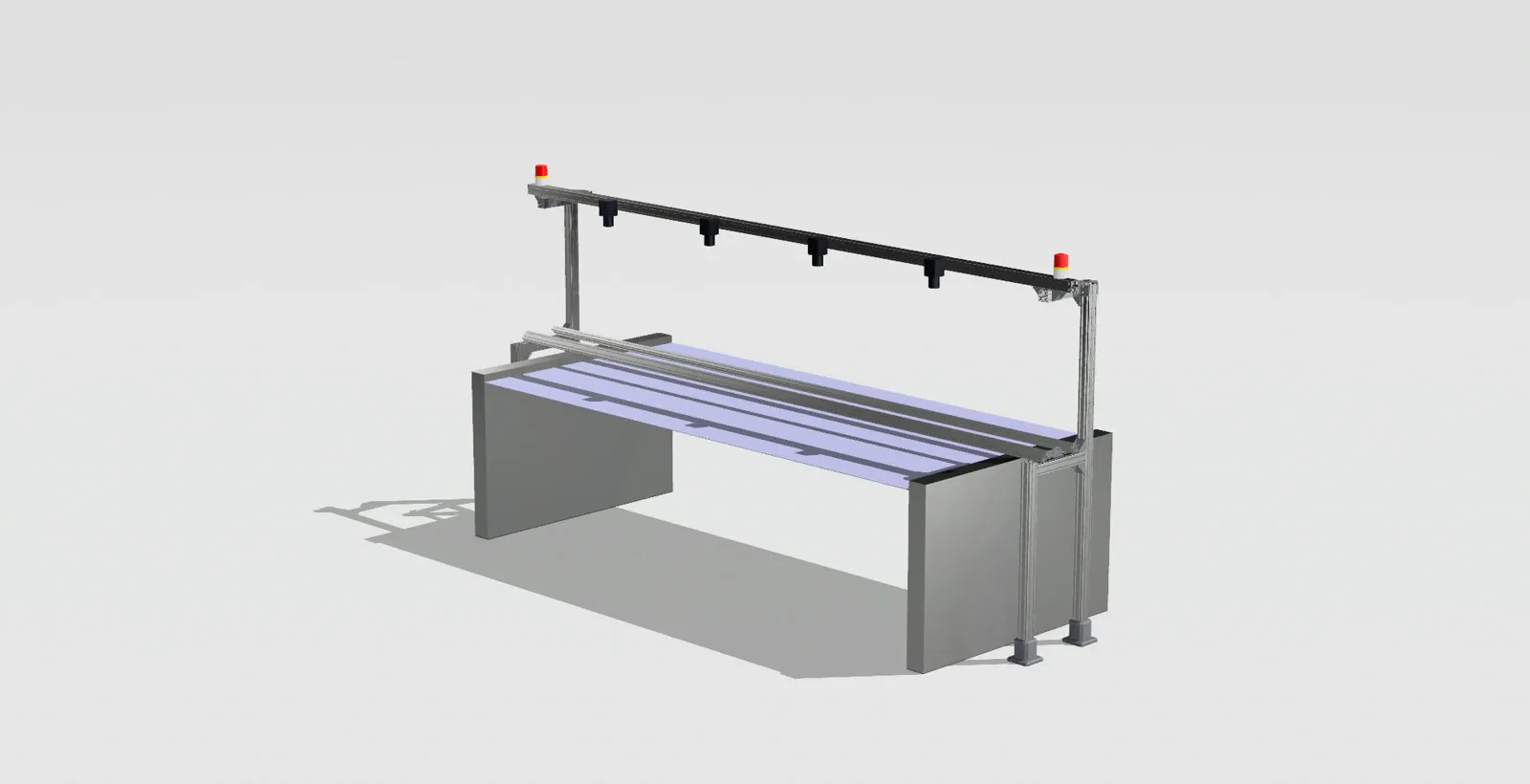
Installed at the yarn guide station of a laminating machine, it uses an industrial camera and vision algorithms to detect broken, merged and skipped yarns in fiberglass / polyester scrim inline, triggers alarms and machine stops, and keeps full roll-level traceability.
- Line speed
- 0–20 m/min
- Alarm response
- ≤100 ms
Details
Inspection Systems
Stenter Fabric Defect Inspection System
Installed at the stenter or other finishing stations, it uses industrial cameras, LED lighting and deep learning to detect holes, pulled threads, color spots and other defects on mosquito net greige and mesh fabric inline, with graded alarms, automatic marking and roll-level traceability.
Details
Inspection Systems
UD Fabric Online Defect Inspection System
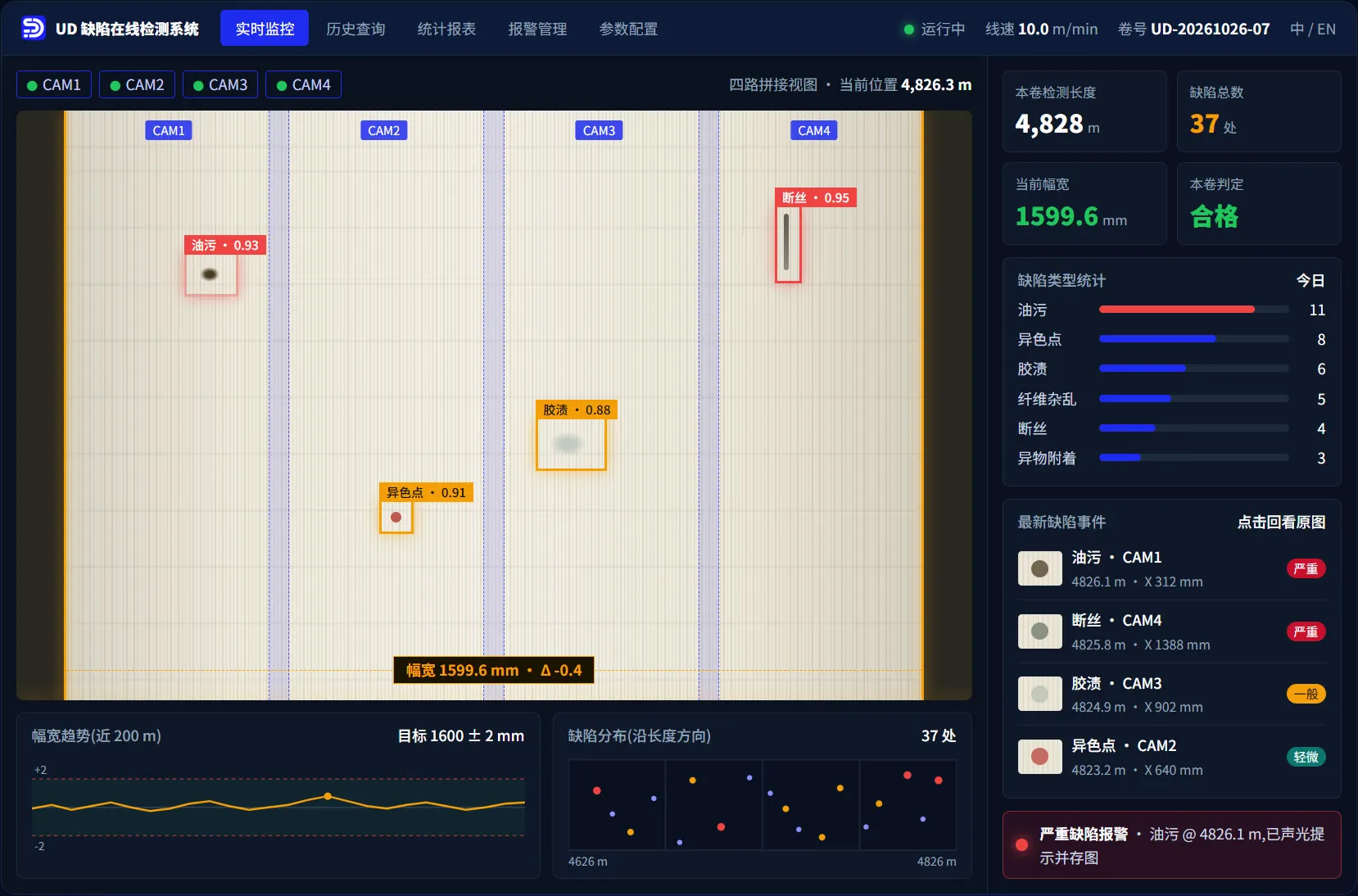
For continuous unidirectional (UD) fabric lines, 4 stitched cameras image the full width while machine vision and deep learning inspect surface defects and measure width at the same time, with real-time alarms and meter-based traceability, replacing manual sampling.
- Fabric width
- About 1.6 m
- Pixel size
- About 0.2 mm/pixel
Details
Have an inspection challenge?
Tell us about your product and requirements. Our engineers will assess feasibility.