Inspection Systems
Yarn Break Inspection System for Laminating Machines
Installed at the yarn guide station of a laminating machine, it uses an industrial camera and vision algorithms to detect broken, merged and skipped yarns in fiberglass / polyester scrim inline, triggers alarms and machine stops, and keeps full roll-level traceability.
Highlights
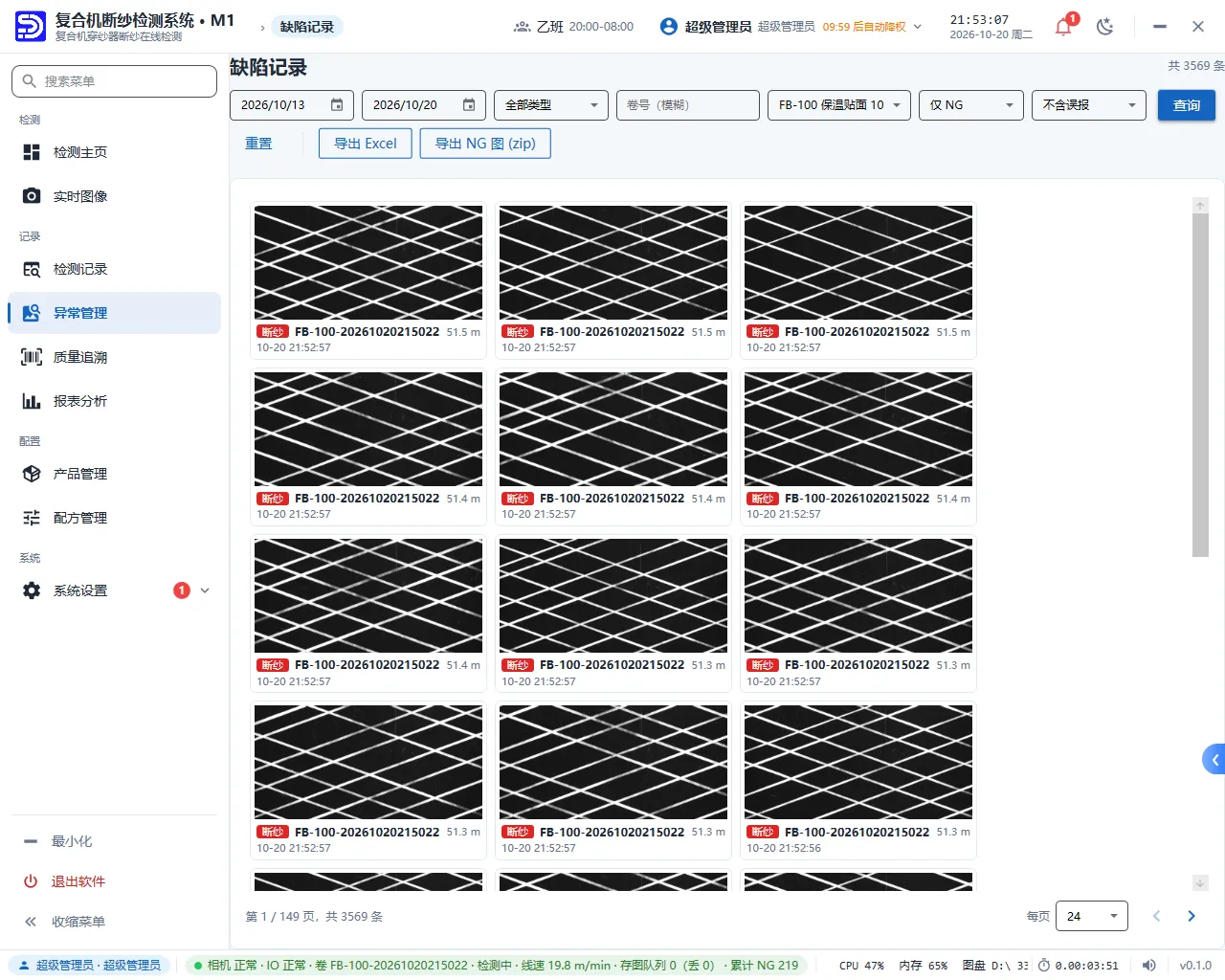
- Frame-by-frame inline inspection; one camera covers the full width of the yarn guide
- Defect-to-alarm ≤100 ms; consecutive NG frames can stop the machine automatically
- Classic vision pre-screening + deep learning review, running on CPU with no GPU required
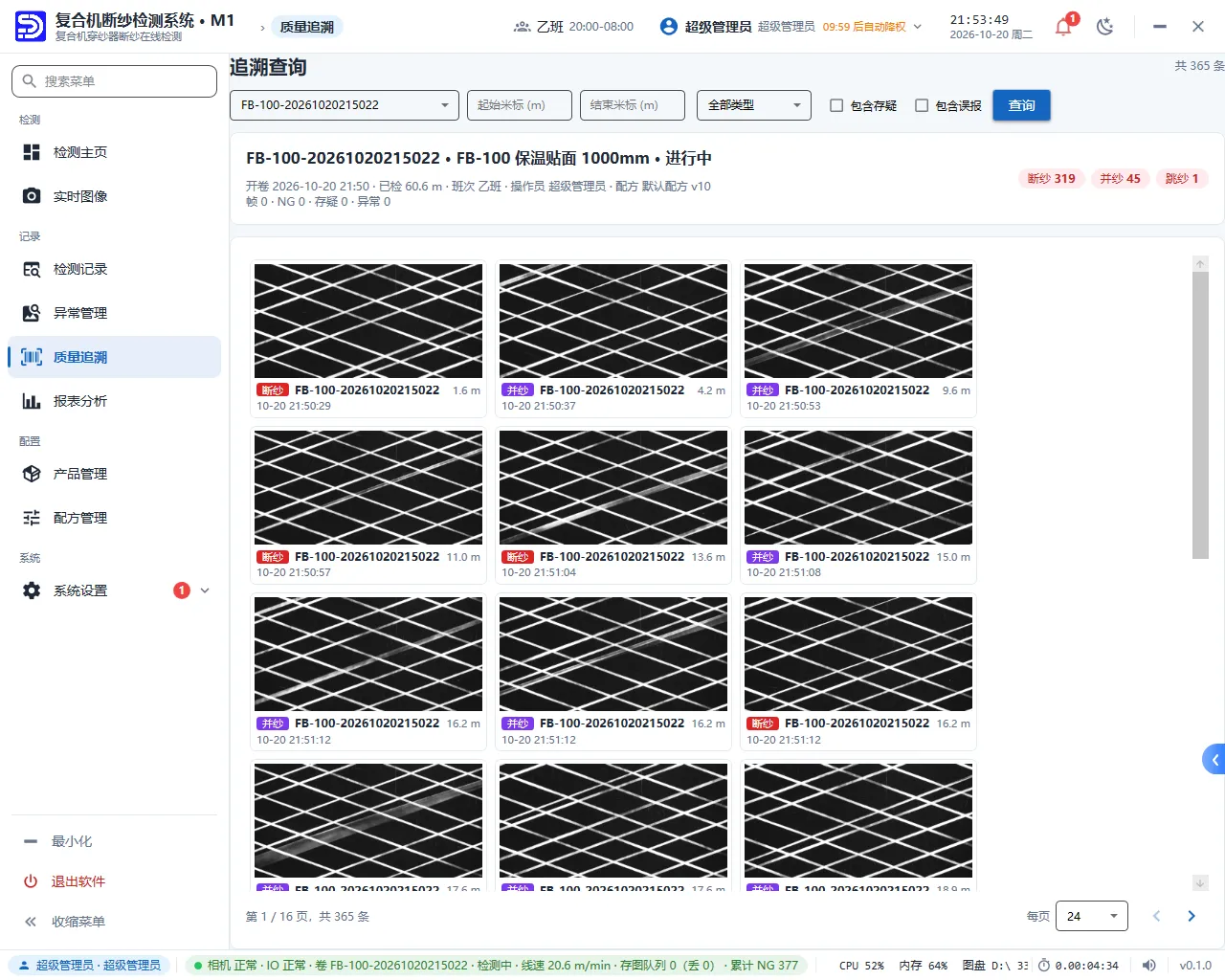
- Defect images, meter position and time are recorded and traceable by roll number
- Connects to the machine via dry contact / 24 V signals, no changes to the existing PLC program
- One independent system per machine, with interchangeable spare parts
Overview
Fiberglass / polyester scrim is the backbone of insulation facing rolls. Tension fluctuation, raw material flaws, guide wear, dust and vibration can all cause broken yarns. A missed defect travels downstream with the roll and leads to rework, downgrading or customer complaints.
Manual inspection struggles to keep up: fiberglass yarns are fine and low in contrast against the substrate, so they are easy to miss; patrols happen every few minutes, so a break is often found tens of meters late; four laminating machines on three shifts need at least 12 dedicated inspectors; manual coverage is about 60%–70%, with no images or timestamps for traceability.
The system replaces the human eye with an industrial camera and vision algorithms, inspecting every frame 24/7.
How it works
- Capture: photoelectric trigger with synchronized strobe imaging
- Judge: classic vision pre-screening + deep learning review
- Respond: audible and visual alarm / automatic machine stop
- Record: defect images, meter position and time are stored
- Trace: query by roll and analyze with reports
Key features
- Two-stage judgment: classic vision pre-screening errs on the side of flagging, then a deep learning model reviews the full image to identify broken, merged and skipped yarns. Uncertain frames are flagged separately as “suspect”.
- Alarm and stop interlock: defects are boxed in red with an audible and visual alarm; when consecutive NG frames reach the set count the machine stops automatically. Thresholds are set per recipe, with one-click alarm reset.
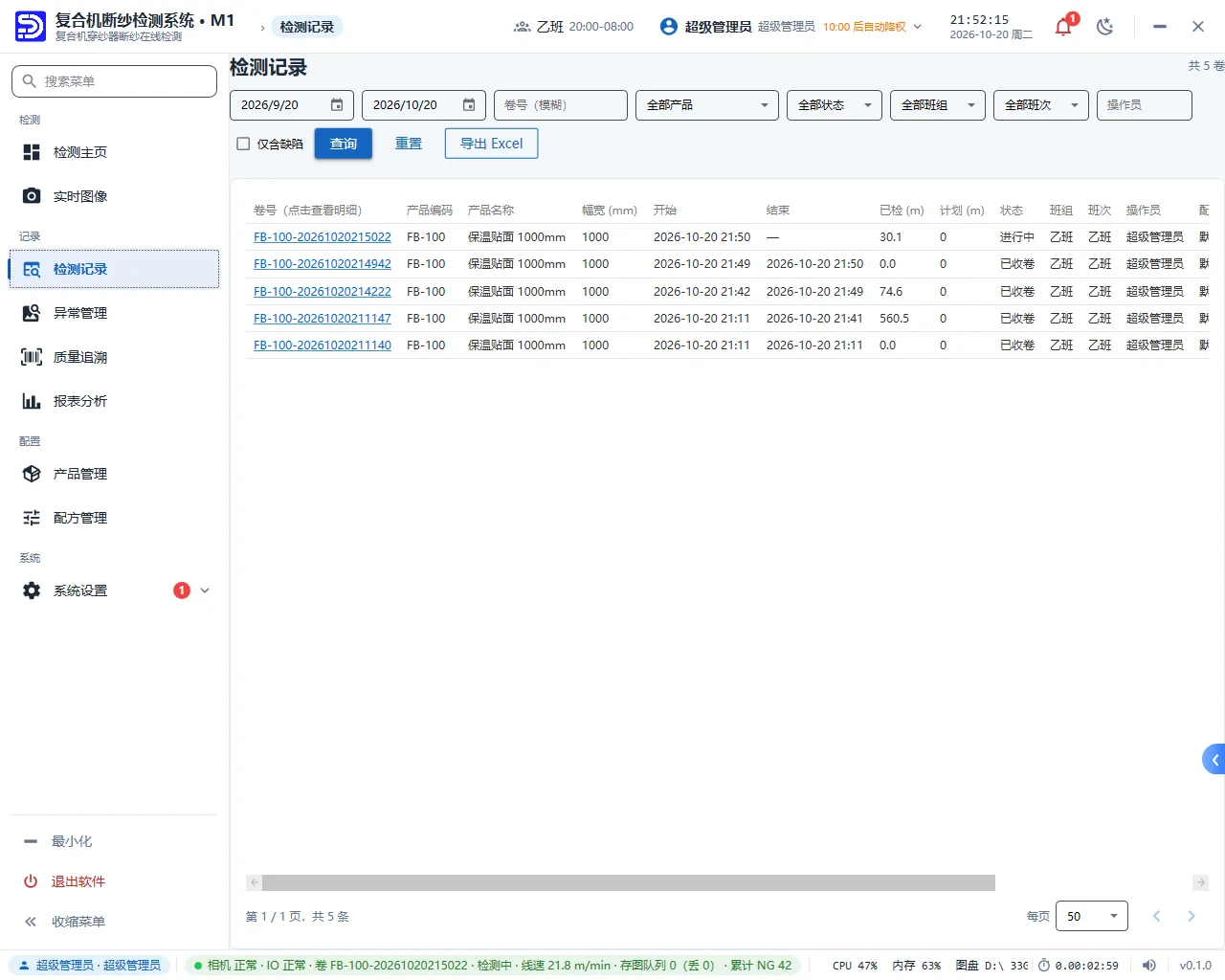
- Roll management and meter positioning: each roll records inspected length, defect count and images; defects are located by meter within the roll for downstream cutting. The current roll is restored automatically after a power loss.
- Review, traceability and reports: QC staff confirm defects or mark false alarms; query by time, roll, shift, product or defect type, and export shift, daily, weekly and monthly reports to Excel.
- Imaging self-check: separate alerts when the image is too bright, too dark, blocked or blurred, so the system never runs without actually inspecting.
- Permissions and audit trail: multi-level accounts, automatic version history for recipe changes, and audit logs for key operations.
The interface is designed for the shop floor, with large touch buttons and keyboard shortcuts. Operators get started in three steps: new roll → start inspection → handle alarms.
Standard configuration (per laminating machine)
| Component | Description |
|---|---|
| Industrial camera | 5 MP global shutter (2448×2048), GigE, hardware trigger, IP65 housing with air purge |
| Lens and lighting | 12 mm industrial fixed-focus lens; white LED bar strobe light (Ra≥90) with strobe controller |
| Trigger sensor | Photoelectric trigger, response ≥1 kHz, sync accuracy ≤1 ms |
| Industrial PC | 17-inch touchscreen panel PC, CPU inference, no GPU required |
| IO module | Opto-isolated 8 DI / 8 DO for machine run / speed signals and stop / alarm / lighting control |
| Alarm and power | Three-color audible and visual alarm (DC 24 V); online UPS (≥10 min); control cabinet |
Each machine has its own system, so a single failure does not affect other machines. Standard signal connections keep installation downtime short, and MES / ERP interfaces (REST / OPC UA) are reserved.
Implementation and service
Implementation takes about 9 weeks: requirements survey (site survey and sample collection) → design and manufacturing (delivery in about 40 working days) → factory acceptance test (FAT) → installation and commissioning (7–14 days of on-site tuning) → site acceptance test (SAT) and training.
- 12-month warranty from the date the site acceptance test is passed
- Fast response: remote response within 2 hours and a solution within 24 hours; on-site within 2 working days when needed
- Free services during warranty: 2 inspections and 1 model retraining per year, free minor software upgrades
- Long-term spare parts: spare parts supply guaranteed for ≥5 years
- Role-based training for operators, QC staff, maintenance and IT, with a Chinese user manual and operation videos, followed by assessment and certification
Detection and false detection figures depend on on-site samples; final figures are based on the site acceptance test (SAT). Specifications are subject to the technical agreement.
Gallery
Related products
Inspection Systems
Stenter Fabric Defect Inspection System
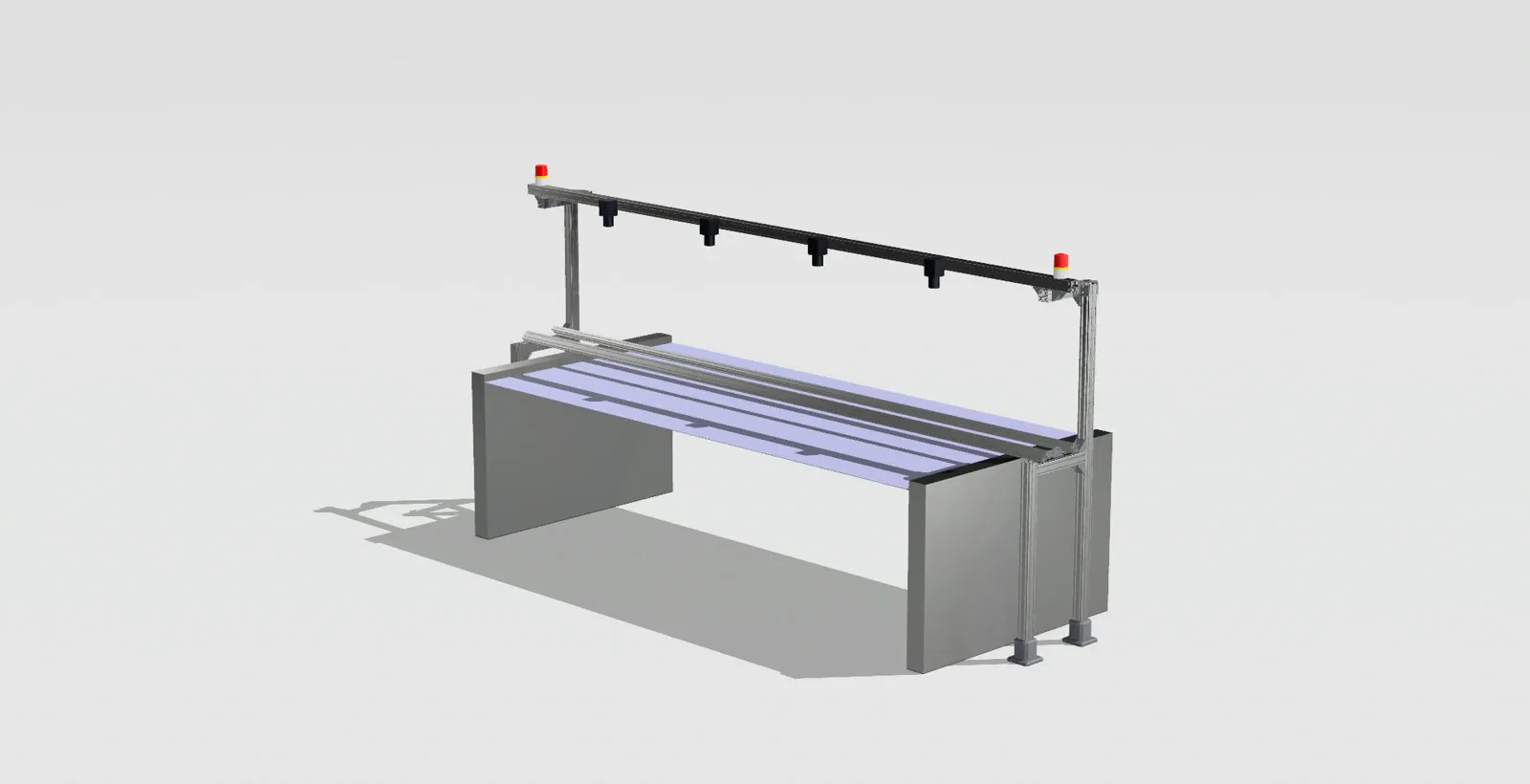
Installed at the stenter or other finishing stations, it uses industrial cameras, LED lighting and deep learning to detect holes, pulled threads, color spots and other defects on mosquito net greige and mesh fabric inline, with graded alarms, automatic marking and roll-level traceability.
Details
Inspection Systems
UD Fabric Online Defect Inspection System
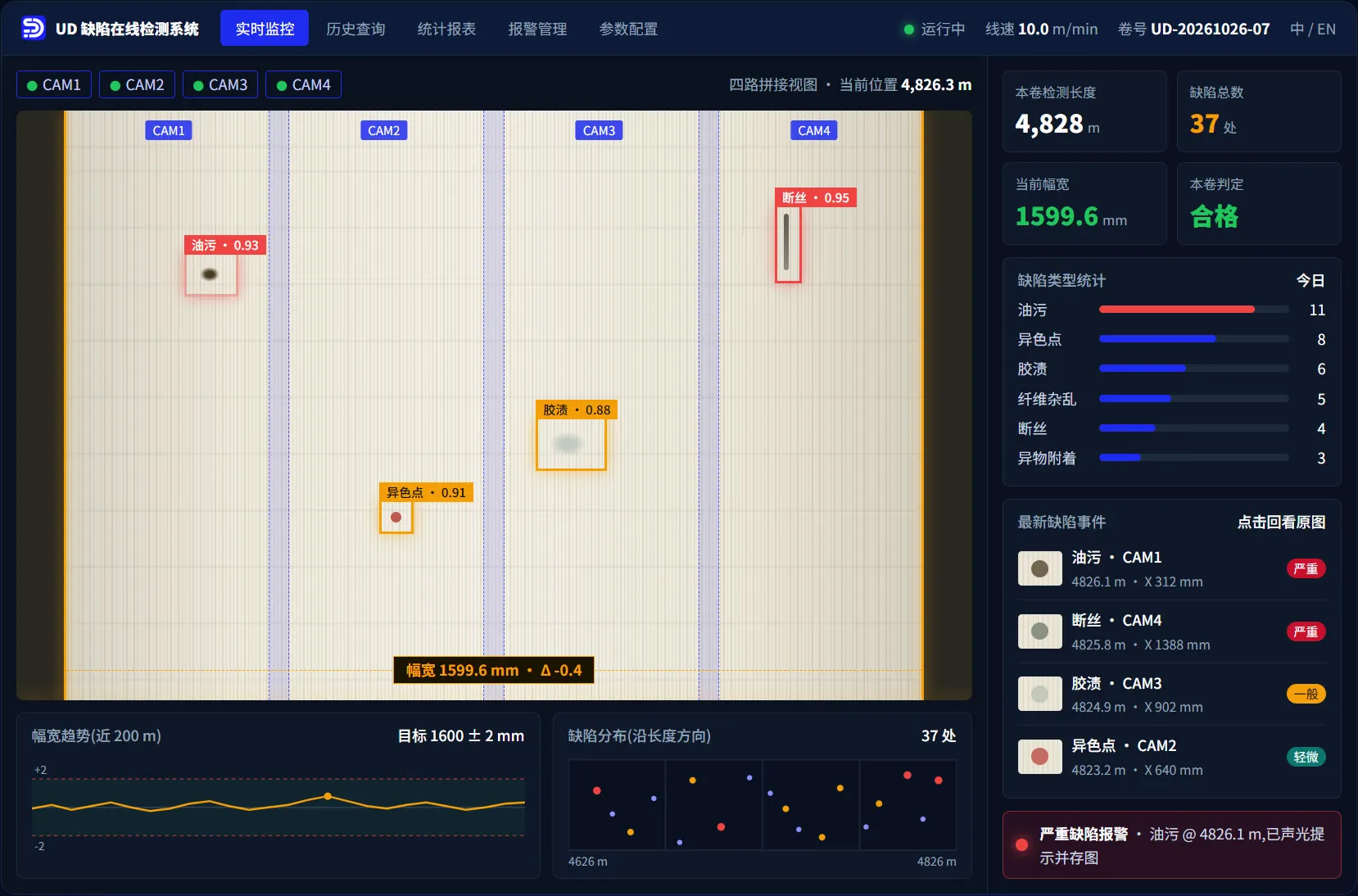
For continuous unidirectional (UD) fabric lines, 4 stitched cameras image the full width while machine vision and deep learning inspect surface defects and measure width at the same time, with real-time alarms and meter-based traceability, replacing manual sampling.
- Fabric width
- About 1.6 m
- Pixel size
- About 0.2 mm/pixel
Details
Inspection Systems
Glass Fiber Yarn Unwinding Inspection System
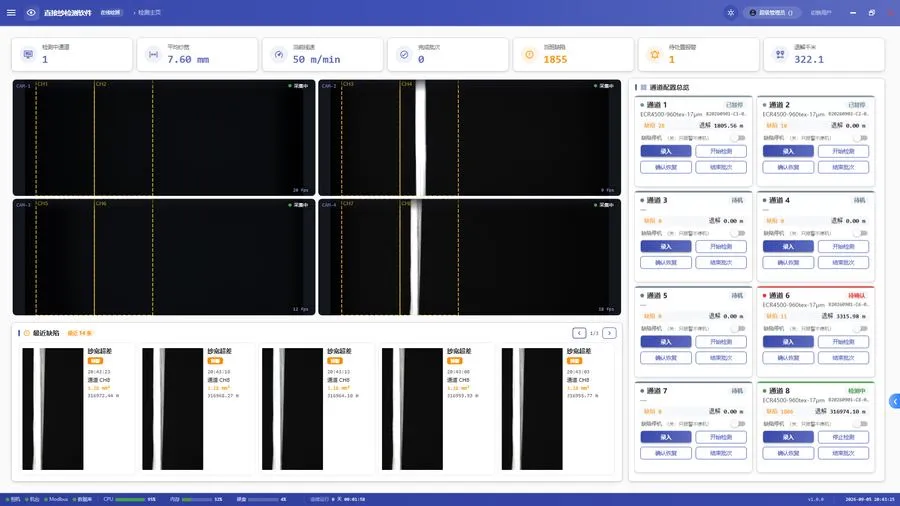
Inline appearance inspection for the unwinding of glass fiber direct roving and assembled yarn. It detects broken yarn, large fuzz balls, out-of-tolerance width and more, stops the winder, and records defect length positions and images by batch.
- Line speed
- 100 m/min and above
- Capture rate
- About 50 frames/s
Details
Have an inspection challenge?
Tell us about your product and requirements. Our engineers will assess feasibility.