Inspection Systems
Glass Fiber Yarn Unwinding Inspection System
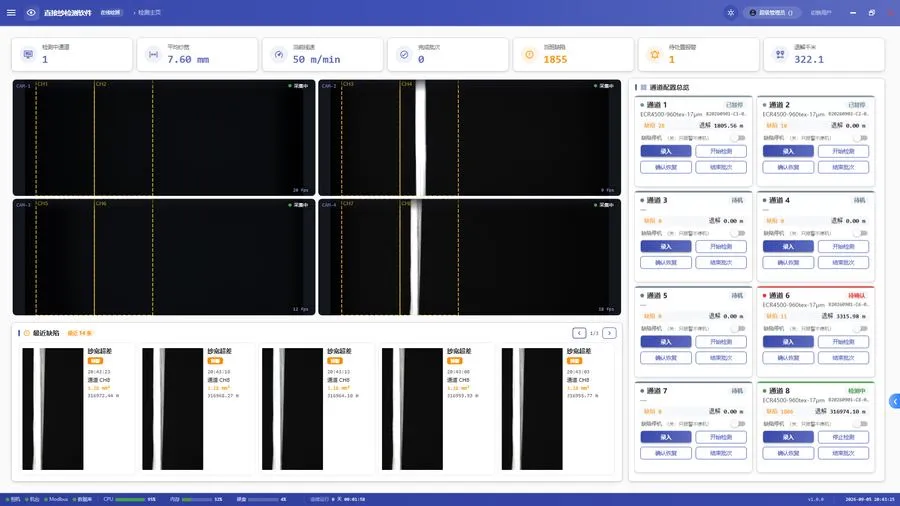
Inline appearance inspection for the unwinding of glass fiber direct roving and assembled yarn. It detects broken yarn, large fuzz balls, out-of-tolerance width and more, stops the winder, and records defect length positions and images by batch.
Highlights
- Inline inspection at unwinding speeds of 100 m/min and above
- Detects five issue types (broken yarn, large fuzz balls, out-of-tolerance width, obvious color difference and lighting faults)
- Severe defects trigger audible and visual alarms and stop the corresponding winder
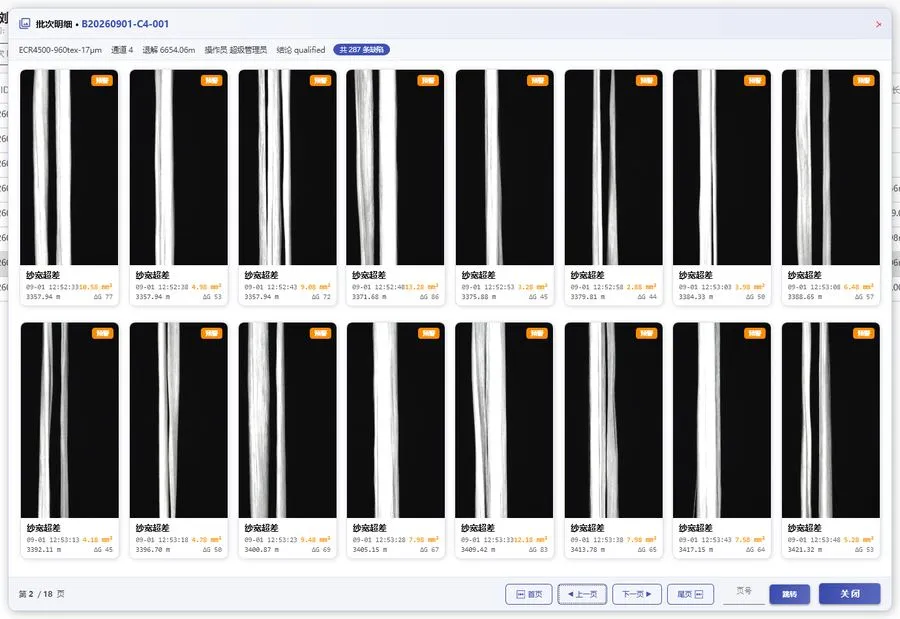
- Each defect is recorded with unwound length, image, time and size, traceable by batch
- Judgment criteria are saved per product model and switched in one step
- One industrial PC runs both the direct roving (8 channels) and assembled yarn (4 channels) systems
Overview
In glass fiber package unwinding, yarn can travel at 100 m/min and above, so fuzz balls, width deviations and broken yarns often appear in view for only tens of milliseconds. Manual watching faces several problems:
- Too much to watch: one person has to follow several high-speed channels at once, and defects are easily missed
- Inconsistent standards: the same fuzz ball may be judged differently on different shifts, distorting quality data
- Fatigue: watching fast-moving white yarn for long periods leads to more missed defects
- No traceability: when a customer reports a problem, it is hard to tell at which meter, furnace position, machine or shift the defect occurred
The Glass Fiber Yarn Unwinding Inspection System replaces manual visual inspection with high-speed industrial cameras, machine vision and AI image classification, and raises alarms and stops the machine automatically when a severe defect is found.
How it works
- High-speed industrial cameras: each camera captures about 50 frames per second and covers two yarn channels; four cameras cover the whole line.
- Machine vision measurement: yarn width, position and brightness are measured in every frame, and any change beyond the standard is detected.
- AI image classification: trained on real defect images to identify defect types; judgment keeps improving as the defect library grows.
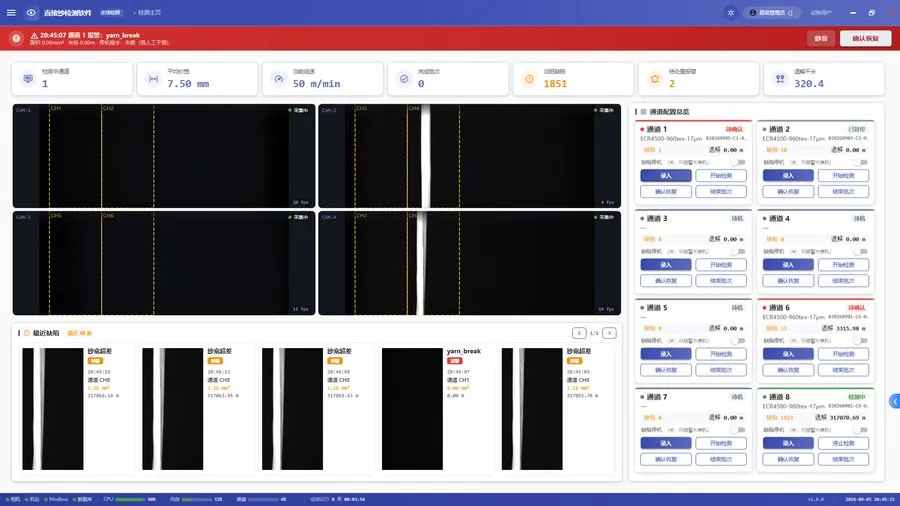
- Alarm and stop: once a severe defect is confirmed, an audible and visual alarm is raised and a stop command is sent to the affected winder. After handling it on site, the operator clicks “Confirm and resume” to continue.
Key features
- Graded handling of five defect types: severe defects such as broken yarn and large fuzz balls trigger an alarm and stop; minor width deviations are only recorded. Criteria such as nominal width and tolerance are saved as product profiles and switched by selecting the model.
- Closed-loop alarm and stop: a severe defect triggers a red alarm banner, audible and visual alarm, a stop of the corresponding winder and image archiving at the same time. Each channel can be set to “alarm only, no stop” for trial runs, splicing and similar periods.
- Defect length positioning and traceability: unwound length is accumulated in real time from winding speed and run time. Each defect record carries the unwound length, image, time and size, linked to batch number, furnace position, shift and winder number. Entering a batch number retrieves all inspection records for that package.
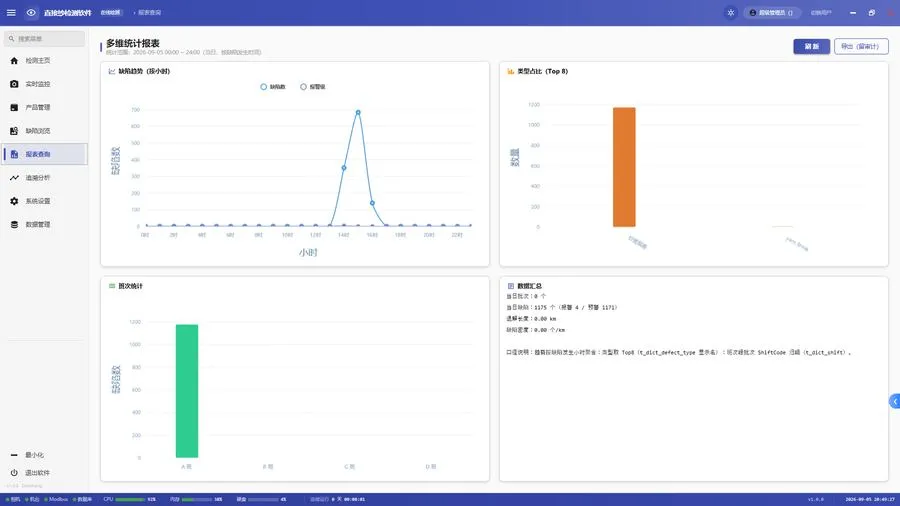
- Reports: peak defect periods, defect type shares, shift comparisons and defects per kilometer, for any time range.
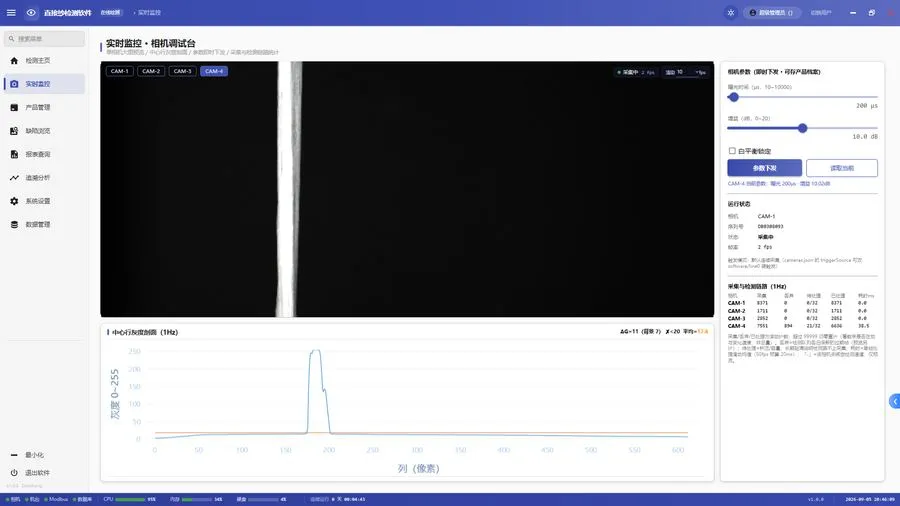
- Easy on-site setup: adjust exposure with a slider on the live monitoring page, read pixel brightness by hovering, and check imaging and focus with the brightness curve.
- Two systems on one PC: direct roving inspection (8 channels) and assembled yarn inspection (4 channels) run on one industrial PC and are enabled per station, with shared accounts. Logins, parameter changes and alarm confirmations are all logged.
Applications
- Inline appearance inspection of glass fiber direct roving during unwinding
- Inline appearance inspection of glass fiber assembled yarn during unwinding
- Glass fiber producers that need batch-level traceability and shift quality assessment
- Textile and chemical fiber lines moving toward automated, low-staff quality inspection
On-site demonstrations with your own yarn are available on request. Specifications are subject to the technical agreement.
Gallery
Related products
 Product video1:34
Inspection Systems
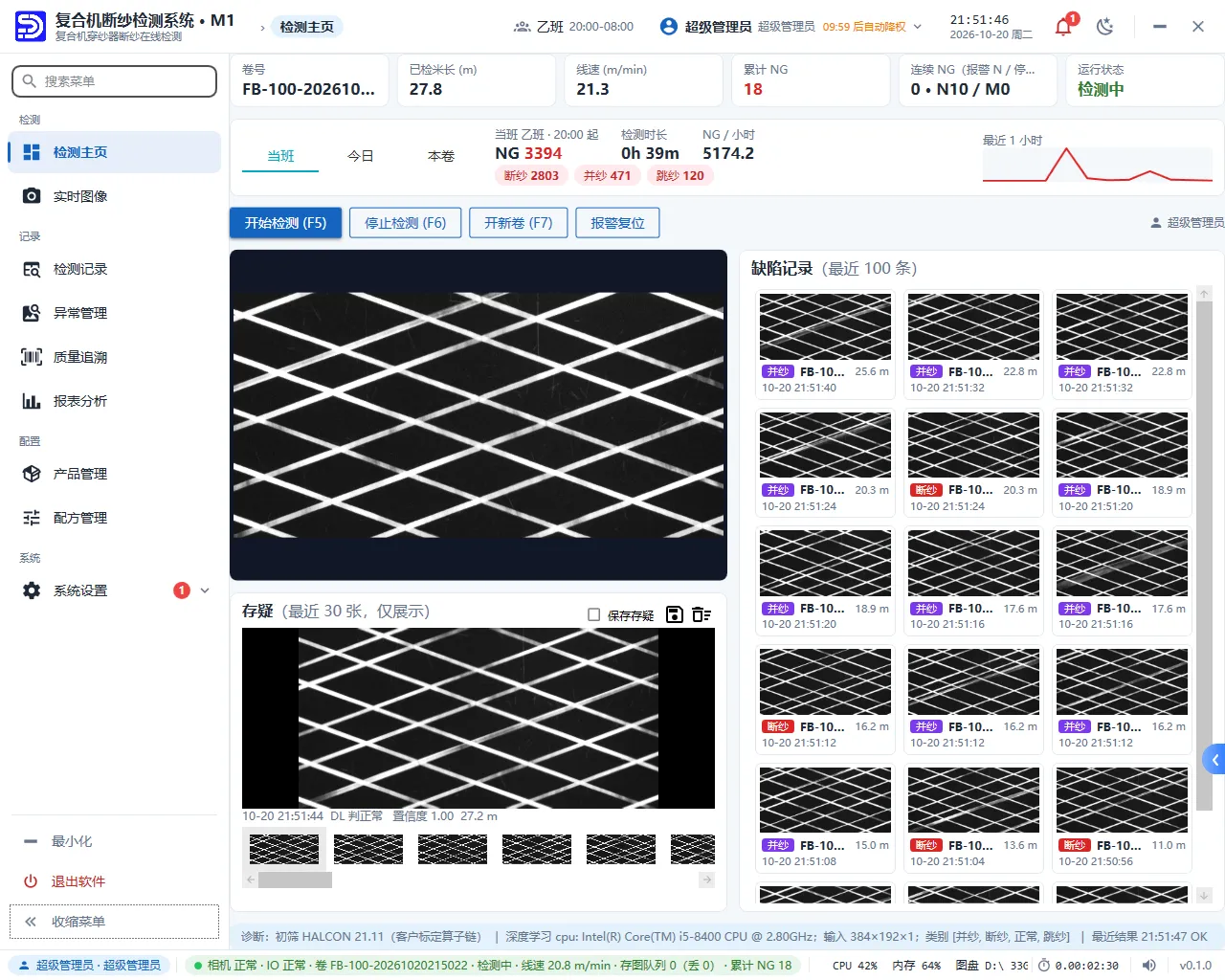
Yarn Break Inspection System for Laminating Machines
Installed at the yarn guide station of a laminating machine, it uses an industrial camera and vision algorithms to detect broken, merged and skipped yarns in fiberglass / polyester scrim inline, triggers alarms and machine stops, and keeps full roll-level traceability.
- Line speed
- 0–20 m/min
- Alarm response
- ≤100 ms
Details
Inspection Systems
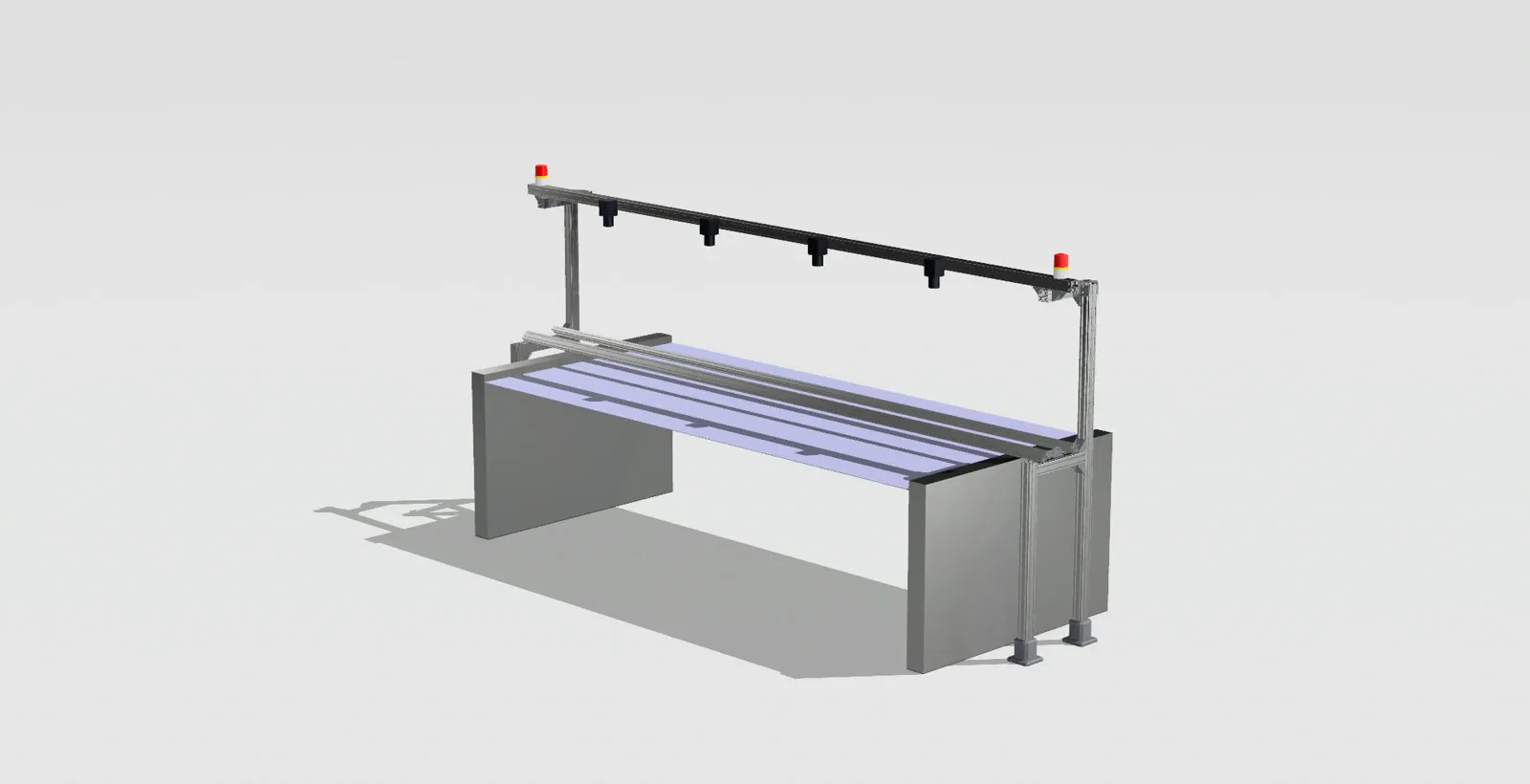
Stenter Fabric Defect Inspection System
Installed at the stenter or other finishing stations, it uses industrial cameras, LED lighting and deep learning to detect holes, pulled threads, color spots and other defects on mosquito net greige and mesh fabric inline, with graded alarms, automatic marking and roll-level traceability.
Details
Inspection Systems
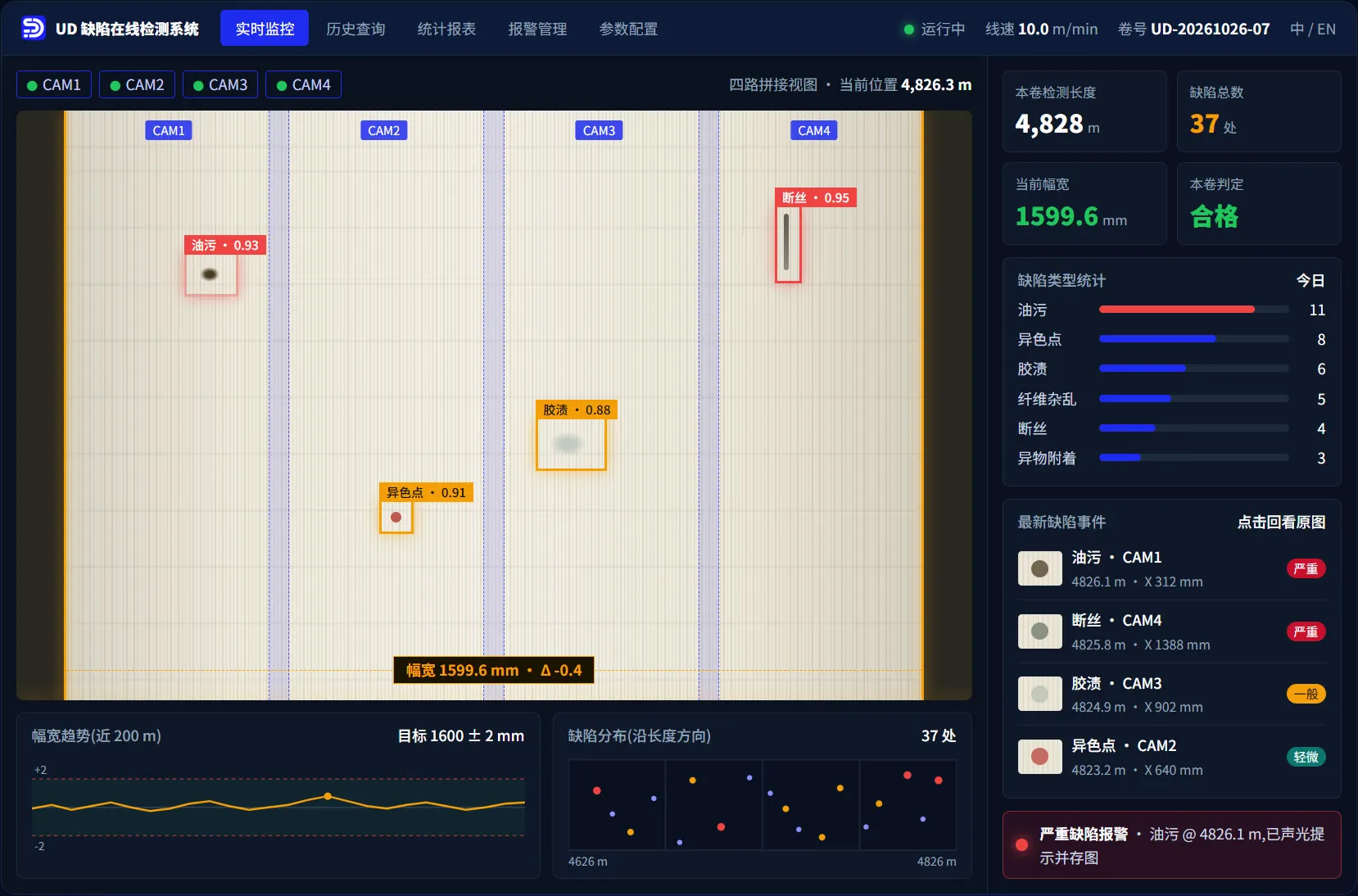
UD Fabric Online Defect Inspection System
For continuous unidirectional (UD) fabric lines, 4 stitched cameras image the full width while machine vision and deep learning inspect surface defects and measure width at the same time, with real-time alarms and meter-based traceability, replacing manual sampling.
- Fabric width
- About 1.6 m
- Pixel size
- About 0.2 mm/pixel
Details
Have an inspection challenge?
Tell us about your product and requirements. Our engineers will assess feasibility.